In the classical sequence, oil is rarely the final step. Traditional Ayurveda follows oleation with warmth, a stage called Swedana. After a Kuzhambu has been warmed and worked into a targeted area, a period of gentle warmth is the natural completion of the ritual. Understanding why the texts pair oil with warmth helps you round off a home routine sensibly and shows where professional steam therapy fits within a formal setting.
Why Warmth Follows Oil
The classical logic is straightforward. Oleation softens and prepares the tissues, and warmth then continues that preparation, encouraging a relaxed, open quality after the oil has been applied. Swedana is the general term for this warming stage. In the traditional Panchakarma order it comes directly after Snehana, the oleation stage, so that the two work as a pair. A Kuzhambu, being a concentrated semi-solid preparation for targeted application, fits this pattern well, since focused local oiling followed by gentle warmth is a coherent and time-honoured sequence.
Swedana in the Classical Framework
Swedana covers a family of warming methods, from simple ambient warmth to the steam procedures used in professional treatment rooms. In a formal setting, a practitioner may follow oiling with a controlled steam application or a warmed herbal bolus, all within a supervised programme. At home the principle is the same but the methods are much gentler. The aim is never intense heat but a mild, comfortable warmth that completes the oiling in a relaxed way.
Safe Home Options for Warmth
- A warm shower or bath a little while after applying a Kuzhambu, following the classical oil-then-warmth order.
- Wrapping the oiled area in a warm, soft cloth to hold gentle warmth for a short period.
- Resting in a warm, draught-free room rather than seeking strong or direct heat.
- Keeping any warmth mild and comfortable rather than intense.
- Allowing an unhurried interval between the Kuzhambu application and the warmth.
Where Professional Steam Belongs
More structured warming, such as steam therapy or a heated herbal bolus, belongs in professional hands. These methods are part of supervised Panchakarma and related treatments, where a practitioner judges the intensity and duration for the individual. A nadi swedana tool is an example of equipment used to direct gentle steam in such settings. At home, the sensible expression of Swedana is the mild warmth described above, kept simple and comfortable, leaving the more involved procedures to trained professionals.
Completing the Ritual Well
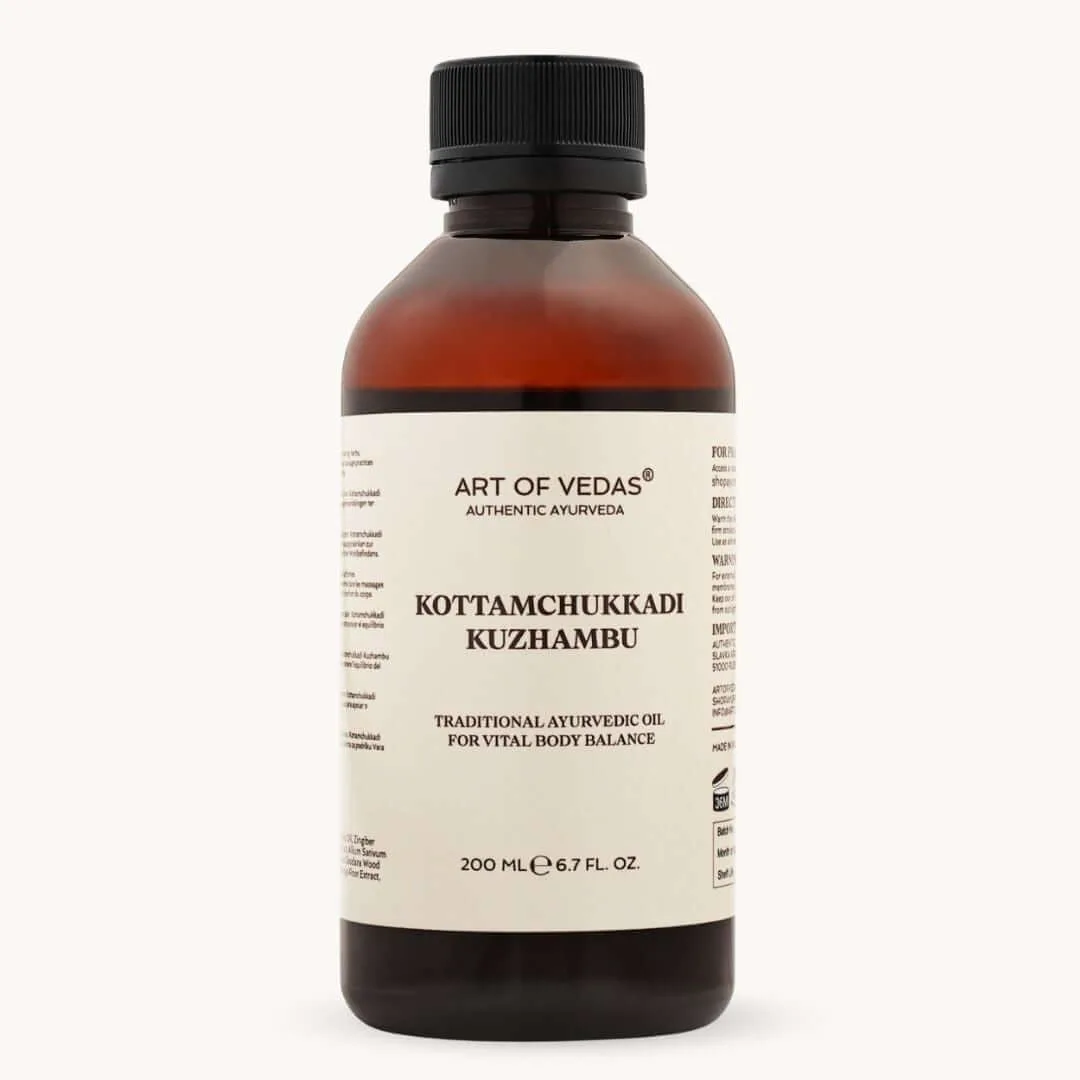
Pairing a Kuzhambu with gentle warmth turns a good application into a complete one. A general preparation such as Kottamchukkadi Kuzhambu suits focused local oiling before warmth, and a nadi swedana tool illustrates the kind of equipment used for directed steam in professional settings. To understand the preparations and the wider tradition, read the Kuzhambu complete guide, the Kizhi bolus massage guide for the warmed herbal bolus method, and the Udvartana guide for the classical dry powder technique that sits alongside these practices.
Frequently Asked Questions
Why should warmth follow a Kuzhambu?
Because the classical sequence pairs oleation with Swedana, the warming stage. Gentle warmth after oiling completes the ritual in the traditional order.
What is a safe way to add warmth at home?
A warm shower or bath after a comfortable interval, or wrapping the oiled area in a warm cloth. Keep any warmth mild rather than intense.
Is home steam therapy advisable?
Structured steam belongs in professional, supervised settings. At home, stick to gentle warmth such as a warm bath or a warm wrap.
How long after applying a Kuzhambu should I add warmth?
Allow an unhurried interval so the application settles, then follow with gentle warmth. A comfortable pause matters more than an exact time.
What is the difference between Swedana and Kizhi?
Swedana is the general warming stage, while Kizhi is one specific method using a warmed herbal bolus. Kizhi is one way of applying warmth within the broader Swedana family.
Kuzhambu preparations from Art of Vedas are for external use only. They are personal care products, not medicines. For professional Panchakarma use, appropriate practitioner training applies. Consult a practitioner before use if pregnant or if you have a medical condition.