A Kuzhambu is a semi-solid preparation, dense and firm at room temperature, and it must be softened with gentle warmth before it can be applied. Warming is not an optional refinement but a practical necessity, and doing it well makes the difference between a comfortable application and a difficult one. This guide sets out the traditional method: how to warm a Kuzhambu safely, how much to use, how to apply it and when to wash it off. It is the page to keep to hand whenever you reach for a Kuzhambu.
Why a Kuzhambu Must Be Warmed
Unlike a Thailam, which pours and spreads at room temperature, a Kuzhambu holds its shape until warmth softens it. Gentle heat loosens the semi-solid preparation so it can be worked into the skin, and warmth is also part of the tradition itself, since warm preparations are considered more comfortable and more grounding. The aim is to soften, not to make hot. A Kuzhambu should be brought to a pleasant, skin-friendly warmth and no more.
The Water-Bath Method
The safest and most traditional way to warm a Kuzhambu is a water bath. Place the quantity you intend to use in a small metal or heatproof container, then stand that container in a bowl of hot, not boiling, water. The gentle, indirect heat softens the preparation evenly over a minute or two without scorching it. Stir or turn it once as it softens. Direct heat over a flame or in a microwave is best avoided, as it heats unevenly and can overheat the preparation. Always test the warmth on the back of the hand before applying.
How Much to Use
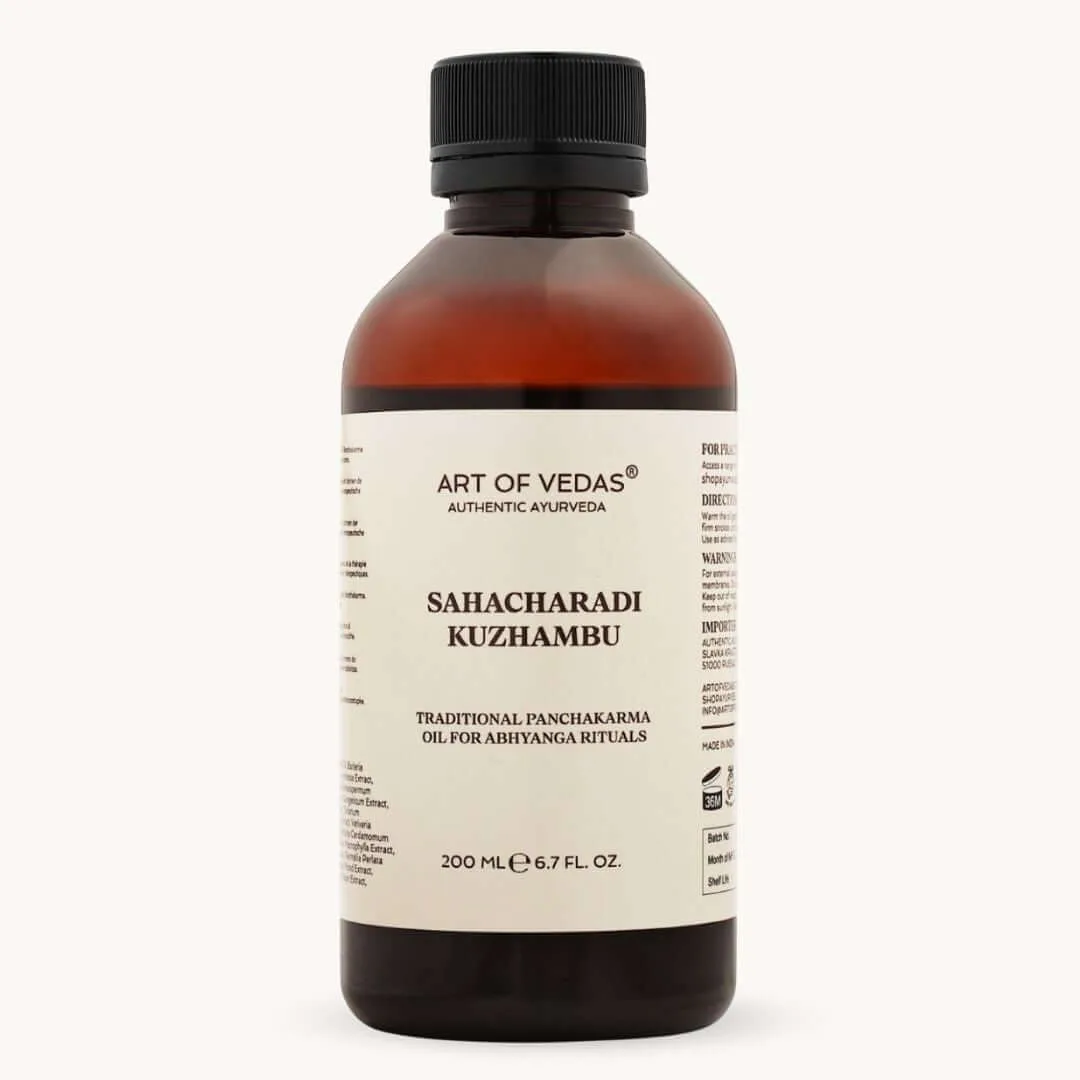
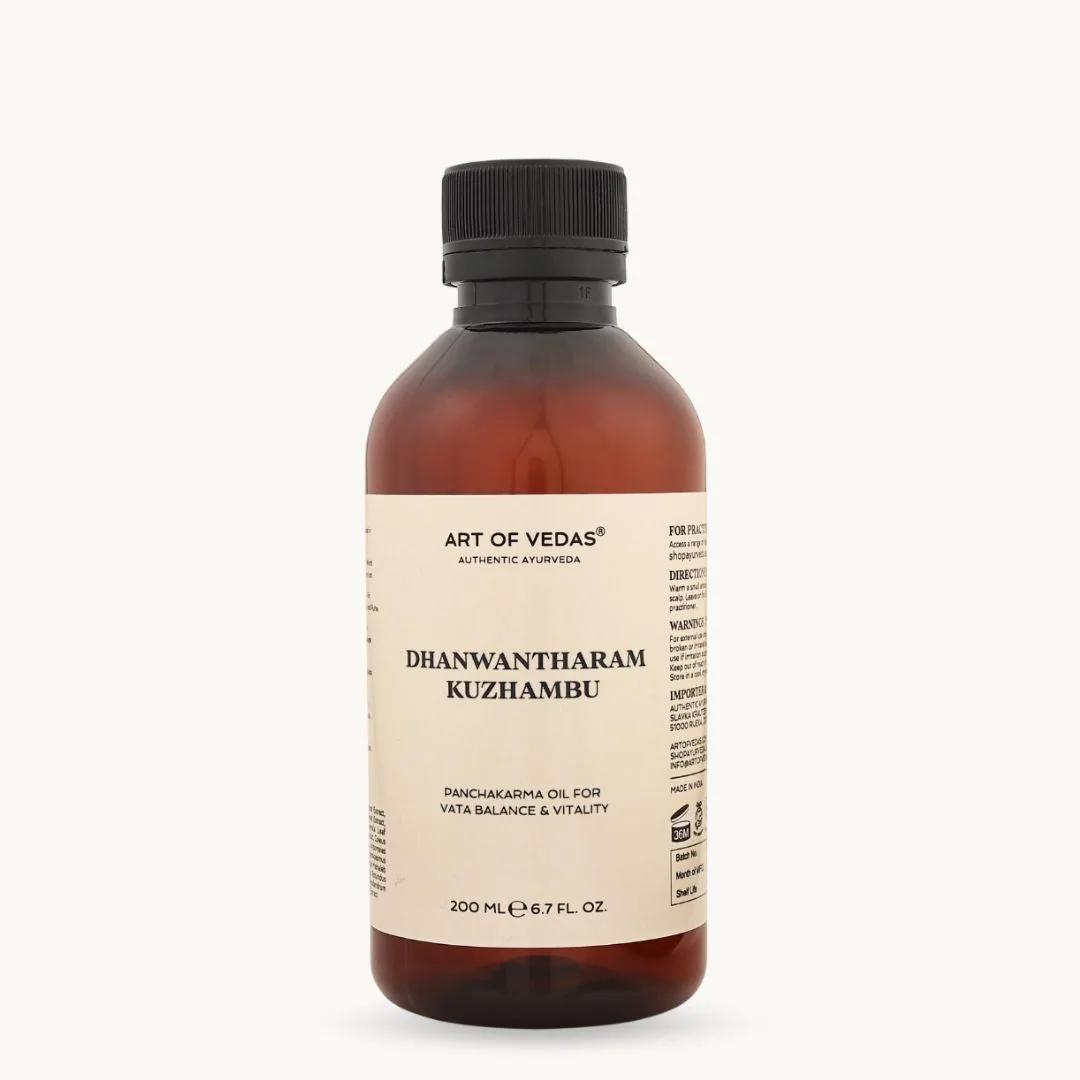
A Kuzhambu is concentrated and clings to the skin, so far less is needed than with a liquid oil. A small amount, roughly the size of a fingertip, is enough for a single region such as a knee or the lower back. It is easy to use too much, and surplus preparation simply sits on the surface rather than absorbing. Start with a little and add more only if a region genuinely needs it. A preparation such as Dhanwantharam Kuzhambu or Sahacharadi Kuzhambu goes a long way when used this way.
Applying and Massage Direction
Once softened, take up a little on the fingertips and work it into the chosen region with slow, steady strokes. Use long strokes along the limbs and gentle circular strokes around the joints, following the classical direction of massage. Because a Kuzhambu absorbs slowly, there is no need to rub briskly, since steady, patient work lets the warmth and the preparation settle into the area. This focused technique differs from a flowing full-body oil massage, and the beginner-friendly approach is set out in our guide to Kuzhambu self-massage for beginners. For the wider classical sequence, see classical Abhyanga with Kuzhambu.
Settling and Washing Off
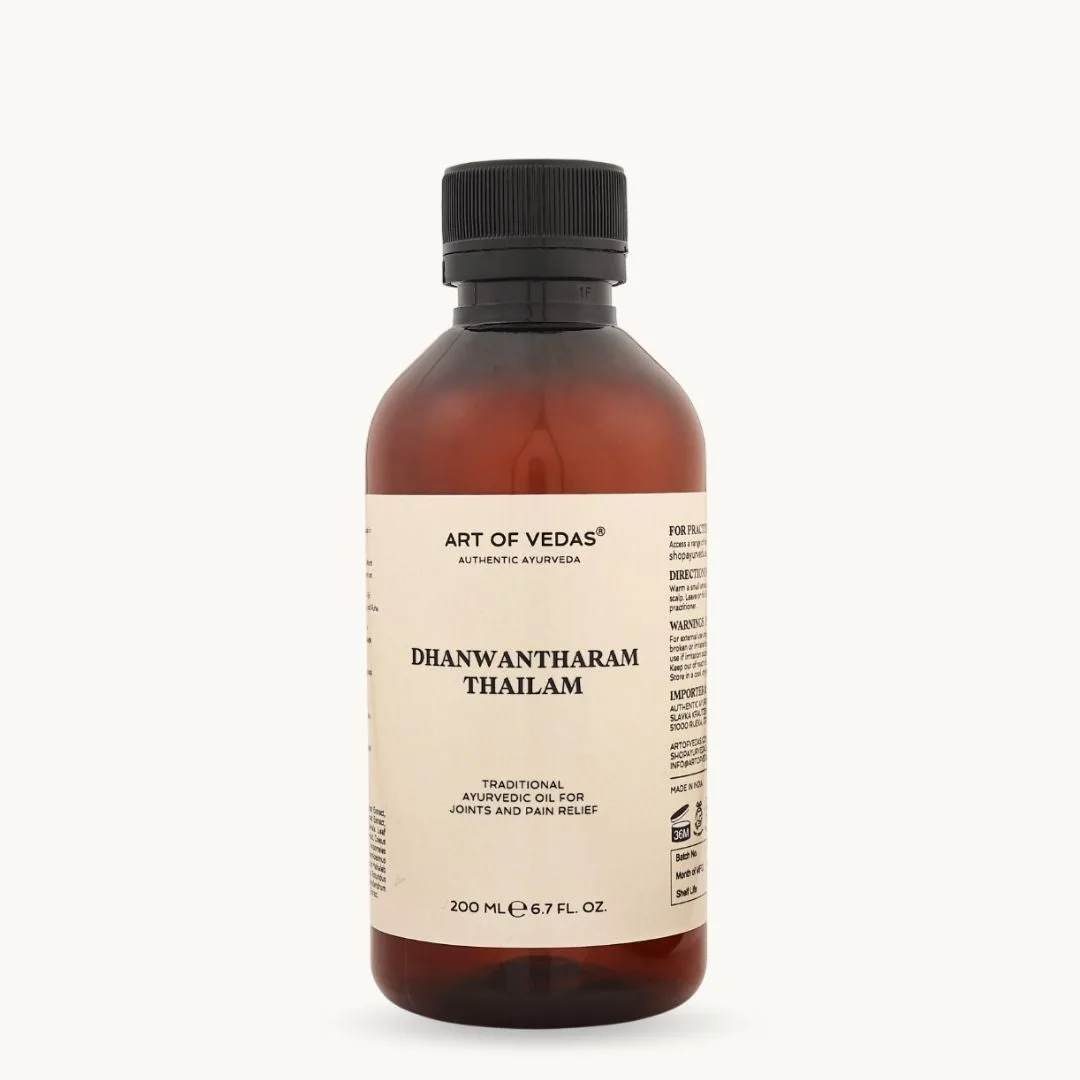
After applying, allow the preparation a little time to settle, commonly ten to fifteen minutes, so the warmth and the herbs have their unhurried contact with the skin. A warm bath or shower then completes the routine. Because a Kuzhambu is dense, warm water and a mild wash help it rinse away comfortably. The timing is similar in spirit to using a liquid oil, though a Kuzhambu, being richer, may call for a little more warmth to wash off cleanly. Those more familiar with oils can compare the routine in our guide to how to use Dhanwantharam Thailam.
A simple checklist for warming and applying a Kuzhambu:
- Warm only the amount you need, using a gentle water bath.
- Soften to a pleasant, skin-friendly warmth, never hot.
- Use a small, fingertip-sized amount per region.
- Work it in with slow strokes, long on the limbs and circular around the joints.
- Let it settle for ten to fifteen minutes, then bathe in warm water.
In terms of the preparation itself, a Kuzhambu is a herbal decoction cooked into a base of sesame, coconut and castor and reduced to a semi-solid. It contains no wax or hardening agent; its firmness is simply the result of the slow reduction, which is why gentle warmth is enough to soften it. Because the herbs are concentrated in this dense form, a modest quantity carries the full character of the formula.
Frequently Asked Questions
Can I warm a Kuzhambu in the microwave?
It is best avoided. A microwave heats unevenly and can overheat the preparation. A gentle water bath softens a Kuzhambu evenly and safely, which is the traditional method.
How warm should it be?
Pleasantly warm to the touch, never hot. Soften the preparation only enough to work it into the skin, and always test the warmth on the back of the hand first.
How much should I use?
A small, fingertip-sized amount per region is usually enough. A Kuzhambu is concentrated and clings to the skin, so surplus simply sits on the surface without absorbing.
How long should I leave it on?
Around ten to fifteen minutes lets the warmth and herbs settle, after which a warm bath completes the routine. There is no need to leave it on for longer.
Why will my Kuzhambu not wash off easily?
A Kuzhambu is dense and rich, so it needs warm water and a mild wash to rinse away comfortably. Cool water makes it harder to remove.
For external use only. Not a substitute for professional medical advice.