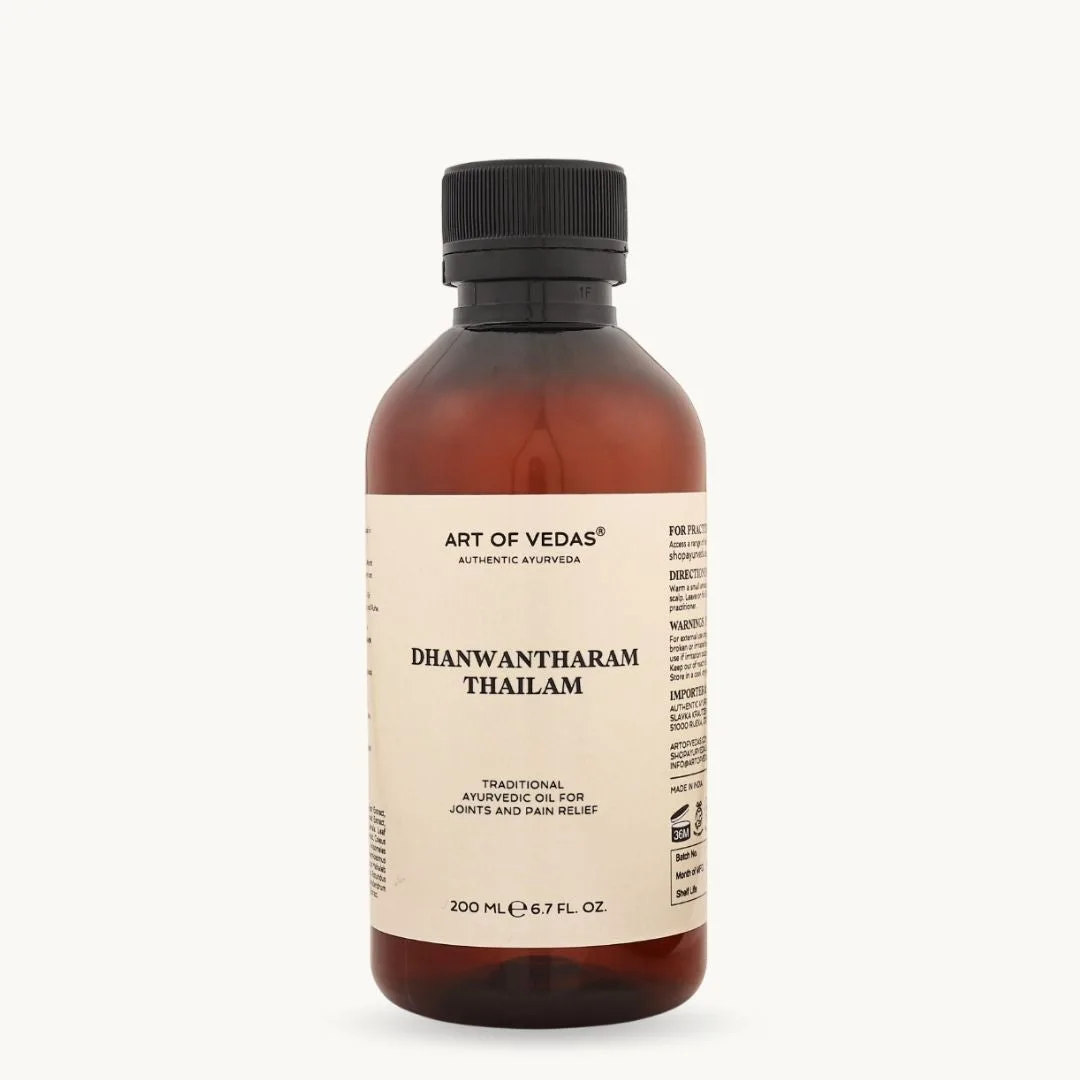
Att använda Dhanwantharam Thailam väl handlar mest om två saker: värm oljan, och applicera den med en massage utan brådska. Dhanwantharam Thailam är en klassisk Vata-balanserande olja, traditionellt använd inom Ayurveda som stöd för led- och muskelkomfort och en samlad, jordad känsla, särskilt under den svalare Vata-säsongen. Den här guiden går igenom de vanligaste sätten att applicera den, från helkropps-Abhyanga till lokal massage och varmt omslag, tillsammans med förnuftiga råd om hur ofta du bör använda den.
Värm oljan först
Dhanwantharam Thailam blir alltid behagligare och verksammare om den värms försiktigt. Ställ den stängda flaskan i en skål med hett vatten några minuter, eller häll upp en liten mängd i en metallskål och värm den över hett vatten tills den känns behagligt varm mot handleden, aldrig het. Varm olja breder ut sig lättare, sjunker in bättre i huden och känns långt mer omslutande än kall olja. Det här enkla steget är kärnan i traditionell oljeapplicering.
Abhyanga: helkroppsmassage på egen hand
Abhyanga är den klassiska självmassage som Dhanwantharam kretsar kring. Häll lite varm olja i handflatorna och stryk ut den över hela kroppen. Arbeta från ytterkanterna in mot hjärtat, med långa drag längs armar och ben och cirklande drag över lederna. Ge axlar, ländrygg, knän och fötter lite extra tid. Låt gärna oljan vila på huden i tio till tjugo minuter och bada sedan i varmt vatten. För oljans bredare sammanhang och dess format, se vår kompletta guide till Dhanwantharam Thailam. Själva oljan hittar du som Dhanwantharam Thailam.
Lokal applicering och varmt omslag
För ett bestämt område som ländryggen, knäna eller axlarna kan varm olja appliceras lokalt med mjuk, cirklande massage. Många följer upp med ett varmt omslag: blöt en ren duk i hett vatten, vrid ur den och låt den vila över det inoljade området några minuter så att värmen förs inåt. Den här lokala metoden är ett traditionellt sätt att stödja komfort och lätthet efter ansträngning. Vill du ha en tjockare beredning används den halvfasta Dhanwantharam Kuzhambu på liknande sätt, och vår notis om Dhanwantharam Kuzhambu och Thailam förklarar när respektive form passar.
Att späda och dryga ut oljan
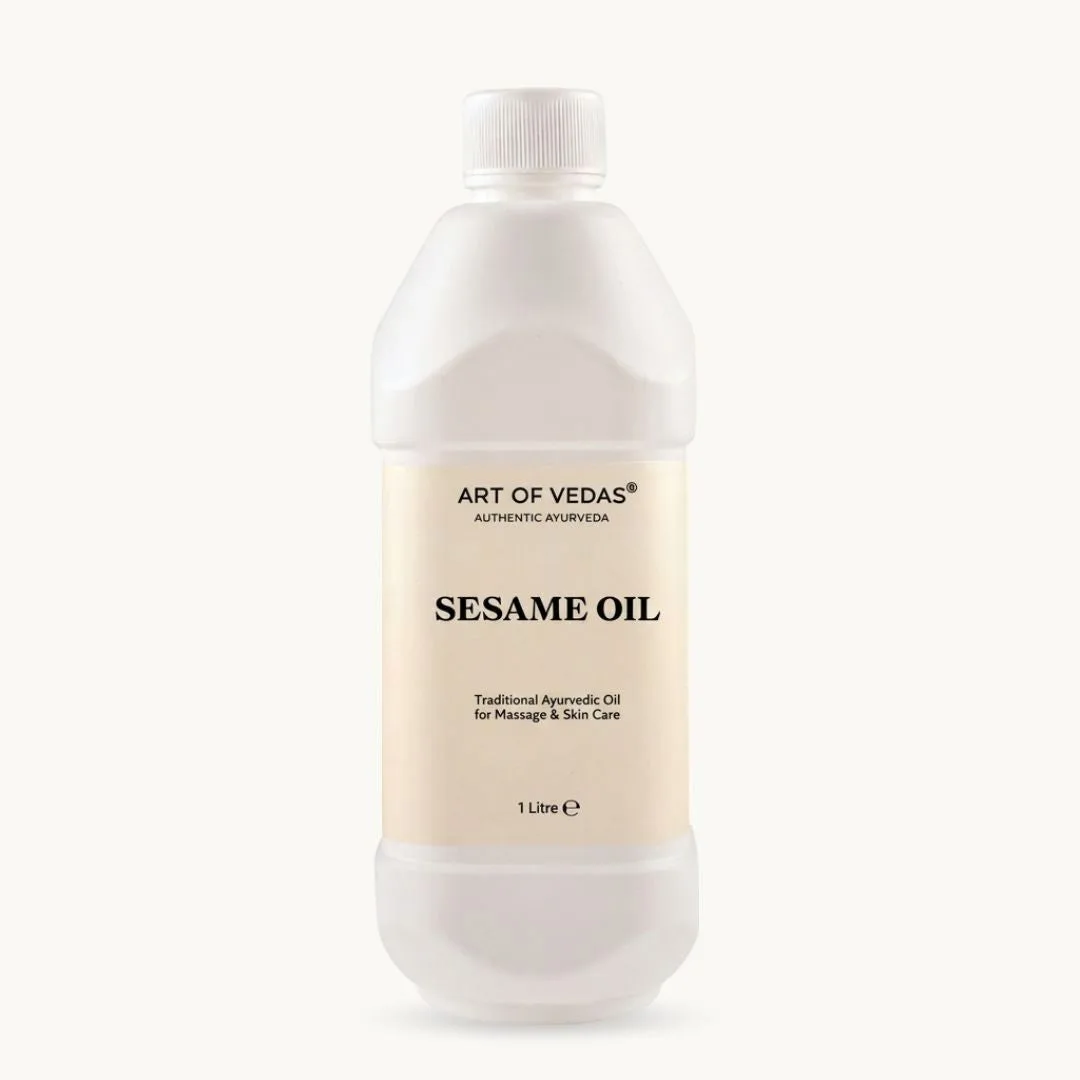
Dhanwantharam Thailam är kraftfull och aromatisk, och en del föredrar att dryga ut den med en enkel bärarolja för en längre och mildare massage, eller för daglig användning över stora ytor. En neutral sesamolja är den traditionella partnern här, eftersom sesam i sig är den klassiska Vata-lugnande basen. Att blanda ett mått medicinerad olja i varm sesamolja ger en mildare och drygare massageolja som ändå behåller formelns karaktär.
Hur ofta, efter årstid och Dosha
- Vata-typer och Vata-säsong (höst och tidig vinter): passar bäst för regelbunden användning, flera gånger i veckan.
- Efter fysisk ansträngning eller en lång dag på fötter: lokal applicering vid behov.
- Kapha-typer: använd lite mindre olja och ta ett varmt bad efteråt för att undvika tyngdkänsla.
- Pitta-typer i varmt väder: håll appliceringarna lättare och mer sällsynta.
- Morgonen är den klassiska tiden för Abhyanga, före badet; kvällsanvändning passar nedvarvningen.
En not om formeln
Dhanwantharam Thailam bereds i en sesambas med Bala (Sida cordifolia, en klassisk stärkande ört) och Dashamoola-gruppens tio rötter, bearbetade med mjölk och ett örtavkok på traditionellt vis. För hela ingredienshistorien och hänvisningen till de klassiska texterna, se vår särskilda artikel om ingredienserna i Dhanwantharam Thailam.
Vanliga frågor
Hur värmer du Dhanwantharam Thailam?
Ställ den stängda flaskan i en skål med hett vatten några minuter, eller värm en liten mängd i en metallskål över hett vatten. Testa på insidan av handleden; den ska kännas behagligt varm, aldrig het. Undvik mikrovågsugn, som värmer ojämnt. Uppvärmningen spelar roll eftersom varm olja breder ut sig och tas upp långt bättre än kall.
Hur länge ska oljan sitta kvar före badet?
Tio till tjugo minuter är det vanliga intervallet efter en hel Abhyanga, tillräckligt för att den varma oljan ska sjunka in i huden. Har du ont om tid är även fem minuter värdefulla. Följ upp med ett varmt, inte hett, bad eller en dusch. Kom ihåg att inoljad hud gör ytor hala, så var försiktig i badrummet.
Kan jag använda Dhanwantharam Thailam varje dag?
Många använder den flera gånger i veckan, och daglig användning passar Vata-typer under den svalare säsongen. Andra föredrar den efter ansträngning eller på tyngre dagar. Låt komforten styra hur ofta, använd lite mindre om huden börjar kännas tung och ta ett varmt bad efteråt. Har du någon sjukdom bör du först rådgöra med en kvalificerad terapeut.
Var på kroppen appliceras den oftast?
Axlar, ländrygg, knän, höfter och fötter är de områden som oftast får extra uppmärksamhet, eftersom det är där traditionen samlar led- och muskelkomforten. Vid en allmän Abhyanga täcks hela kroppen med långa drag längs armar och ben och cirklande drag över lederna. Flytta tyngdpunkten dit där värmen känns mest välkommen.
Ska jag välja oljan eller Kuzhambu?
Thailam är en lättflytande olja som passar helkroppsmassage, medan Kuzhambu är en tjockare, halvfast beredning som ofta föredras för koncentrerad lokal användning. Många hushåll håller oljan för vardaglig Abhyanga och Kuzhambu för bestämda områden. Vår jämförelse av de två formaten förklarar de praktiska skillnaderna närmare.
Endast för utvärtes bruk. Ersätter inte professionell rådgivning.