Ayurveda treats the evening as a threshold. How the last hour of the day is spent shapes how the night receives you, and the tradition offers a very tangible way to cross that threshold: warm preparation, slow hands, three small stations of the body. In classical the preparation for this wind-down is often a Kuzhambu, the semi-solid format whose dense, slow-absorbing texture suits quiet, stationary evening use far better than a runny oil. This article describes a complete evening routine built on three points: the feet, the shoulders and the crown.
The thinking behind the routine
The end of a modern day is, in Ayurvedic terms, a Vata moment: screens, travel, conversation and deadlines all scatter attention outward. The classical response is warmth, weight and repetition. A Kuzhambu answers all three. Prepared on a base of three fats, sesame, coconut and castor, cooked with herbal decoctions until it sets semi-solid, it softens with gentle warming, stays on the applied area and absorbs slowly while you sit still. It is local, deliberate care, and unlike a flowing oil it does not ask you to shower immediately afterwards or to protect every surface in the room. In the colder months this same logic extends across the whole season; our guide to the Kuzhambu cold-season routine takes it further.
What an evening application offers
- A clear, physical signal that the working day has ended
- Traditional Vata-settling warmth at the hour it is most welcome
- Focused care for feet and shoulders, the two regions that carry most days
- A slower pace: ten to fifteen minutes of unhurried, repetitive strokes
- Nourishing attention for skin at the end of the day rather than the rush of the morning
The three stations: feet, shoulders, crown
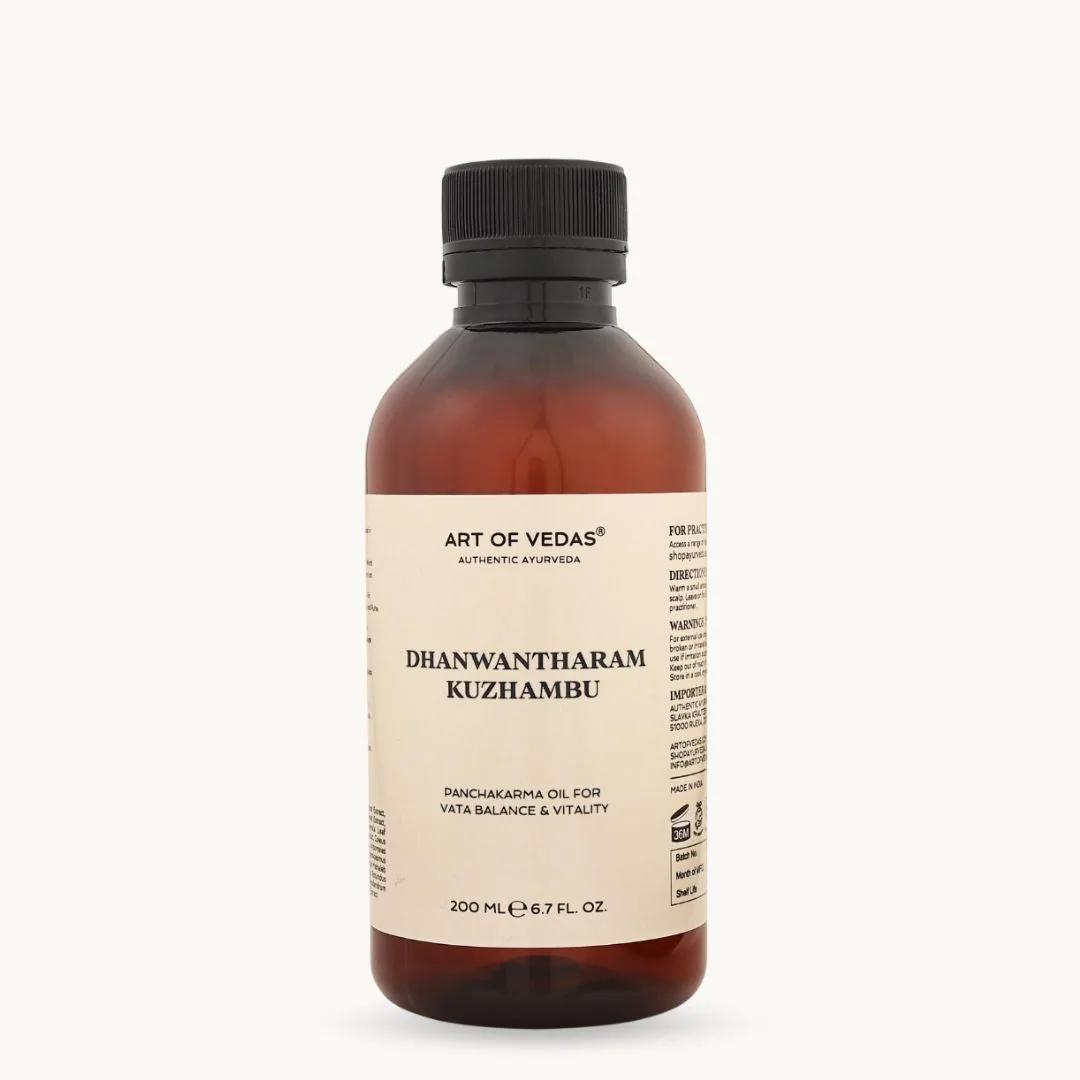
Start with the feet, about half an hour before bed. Warm the closed jar of Dhanwantharam Kuzhambu in a bowl of hot water, take half a teaspoon per foot and work the soles with slow thumb strokes, heel to toes, for five minutes each side. The full sequence, including the traditional bronze bowl, is described in our Kuzhambu foot ritual before sleep.
Move to the shoulders. Take a teaspoon of the softened preparation and apply it across the tops of the shoulders and the sides of the neck with broad, slow circles, then long strokes outward along each shoulder. Two or three quiet minutes per side is enough; this is settling work, not deep massage.
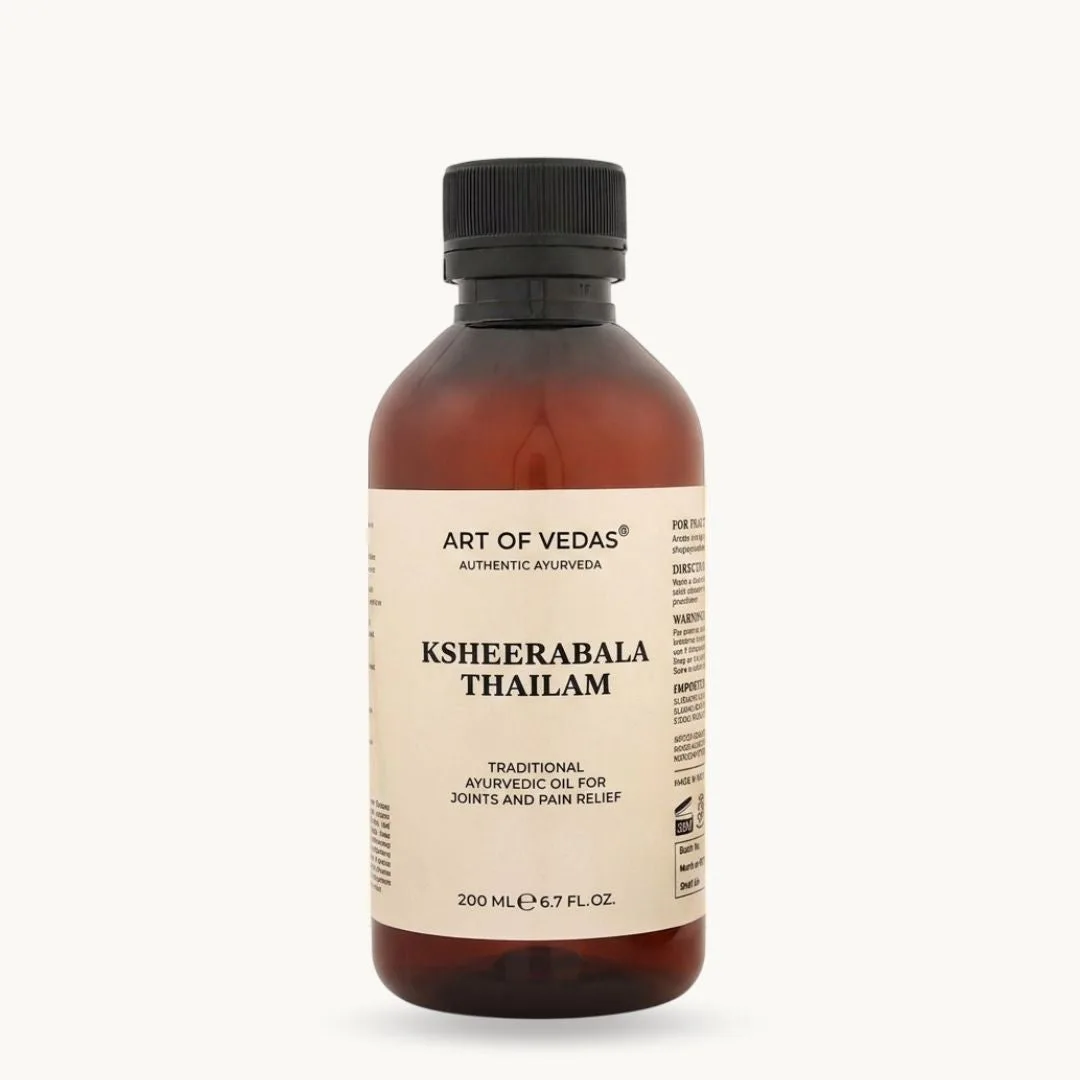
Finish at the crown. Here the tradition prefers a few drops of a gentle classical oil rather than the semi-solid preparation; Ksheerabala Thailam is the household standard for this purpose. Warm two or three drops between the fingertips and rest them on the crown with light circular movements for a minute. Where and how to use that oil more fully is covered in our Ksheerabala application guide. Then dim the lights, wipe the hands, and let the preparations do their slow work while you wind down. Wear old cotton socks and a modest collar you do not mind marking, or wipe residue with a warm towel before lying down.
The formula in the jar
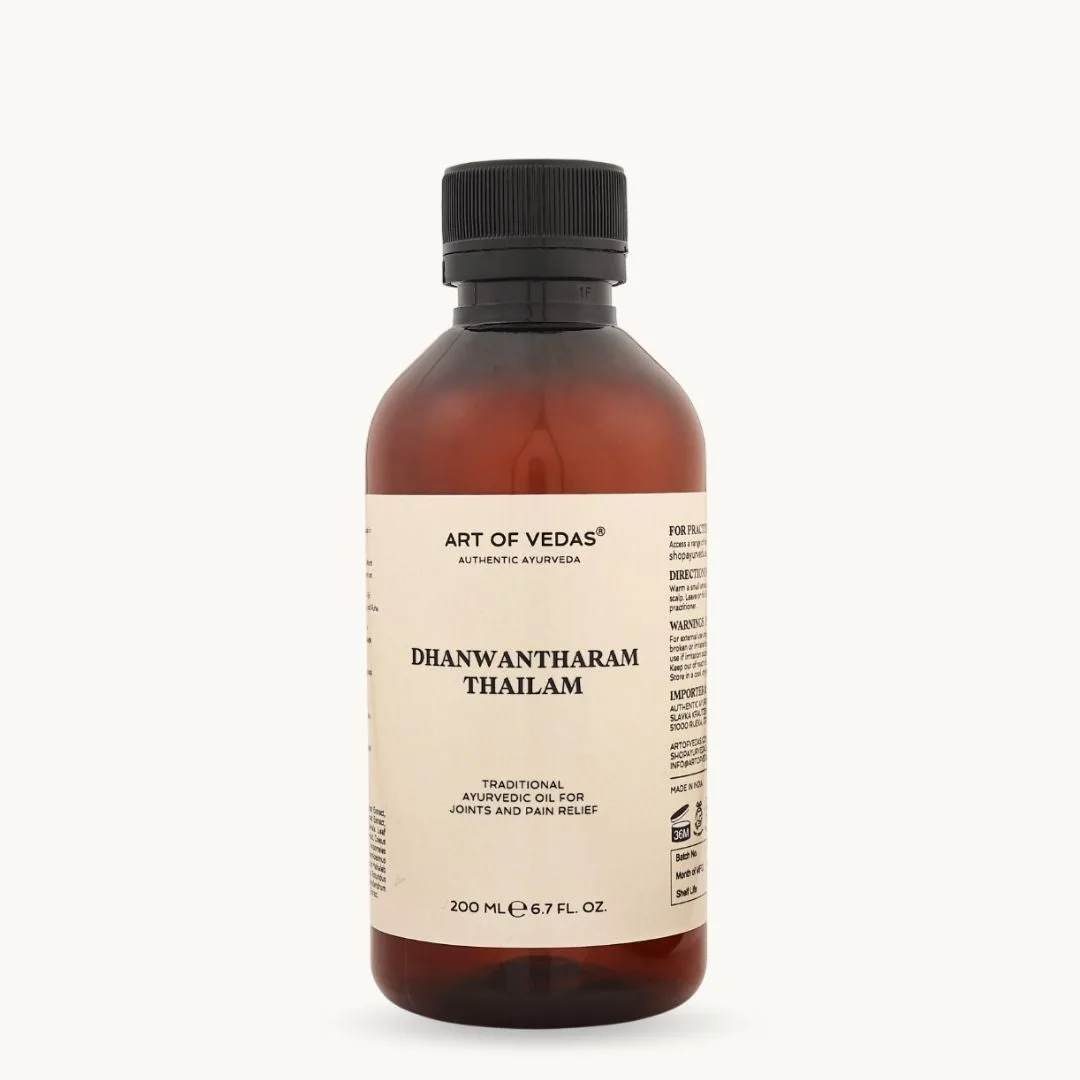
Dhanwantharam Kuzhambu carries one of classical's most trusted evening formulas: Bala, Sida cordifolia, supported by the ten classical roots known as Dashamoola and a wider group of botanicals, prepared as decoction and paste and cooked slowly into the three-fat base until the moisture is gone and the preparation sets soft and dense. It is the same lineage as the well-known Dhanwantharam Thailam, offered in the texture the evening asks for.
Frequently Asked Questions
How long before bed should I begin?
Thirty to forty minutes is comfortable. It leaves time for all three stations and a quiet interval before you lie down.
Do I need to shower afterwards?
No. Wipe any residue with a warm, damp towel and protect bedding with cotton socks and an old pillowcase. Rinse in the morning shower.
Can I do only the feet?
Yes. The foot station alone is a complete ritual, and the one most worth keeping on busy nights.
Which nights suit this routine best?
Any night, though it earns its place most clearly after overstimulated days: travel, screens, long meetings, late training.
Is the routine different in summer?
Use smaller quantities and shorter sessions in warm weather. The sequence itself stays the same throughout the year.
This article describes traditional Ayurvedic practice for general information and personal care. It is not medical advice. If you are pregnant, have a health concern or know your skin reacts easily, please speak with a qualified professional before beginning a new routine.